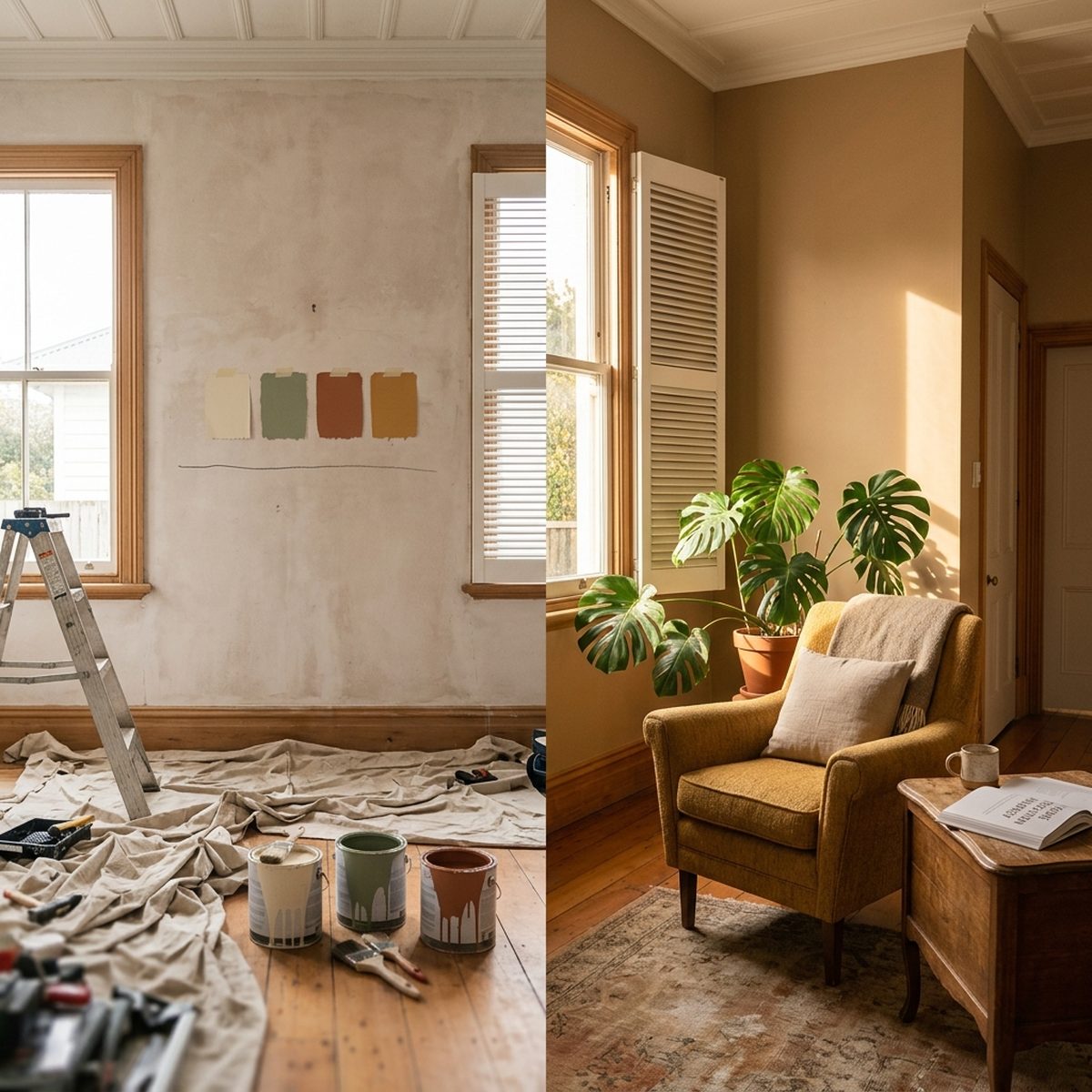


Three out of four homeowners finish a renovation project feeling disappointed with the result. If you’ve ever stared at a newly decorated room and felt it wasn’t quite ‘you’, you’re not alone. This widespread dissatisfaction drives a critical question for anyone planning a home update: is investing in a design personality course worth it in 2026? For homemakers aiming to create spaces they genuinely love, the answer increasingly hinges on avoiding costly emotional and financial rework by first understanding their core design instincts.
What Exactly is a Design Personality Course?
A design personality course differs fundamentally from a traditional interior design certification. It does not teach technical drafting or current trends. Instead, it functions as a guided self-discovery process. Programs like Creating Design Clarity’s core offering use structured modules to help you uncover your ‘Design DNA’. This is the unique blend of aesthetic preferences, lifestyle needs, and emotional drivers that make a space feel authentically yours. This foundation in design thinking training empowers you to communicate clearly with professionals or make confident DIY choices. The goal is not to become a designer, but to become the expert on your own taste. This is the most valuable skill for any home project.
This form of online design education has gained traction because it addresses a specific gap. Many accredited design programs focus on commercial skills or broad theory. For a homeowner, the immediate need is clarity, not a new career. A design personality course provides that focused, personal insight. It can be more immediately applicable than a graphic design specialisation or a UX/UI bootcamp when planning your living environment. For instance, understanding your preference for organic textures over sleek metallics directly informs material choices for a kitchen renovation, a decision rarely covered in digital design bootcamps.
The Hidden Cost of Getting Your Design Wrong
To understand the value of a design personality course, you must first calculate the true cost of indecision. Industry data reveals that nearly 30% of a renovation budget is lost to changes, corrections, and rework after the fact. This is not just about money. In addition, it encompasses time, stress, and the lingering regret of a space that does not reflect who you are. The financial drain from purchasing the wrong furniture, repainting walls, or hiring a designer for multiple revisions can far exceed the upfront cost of a clarity course.
Consider the emotional toll. Living in a home that feels misaligned with your personality can subtly impact your well-being and daily joy. A design personality course acts as an insurance policy against this outcome. By investing time in self-discovery before you pick up a paint swatch, you solidify a vision that guides every subsequent decision. This protects your budget and your peace of mind. For design professionals, this process also offers profound insight into how personal aesthetics drive professional satisfaction, and why they should have their clients learn their design personality before starting the creative process with them. A 2024 survey by the Design Institute of New Zealand found that 68% of homeowners who felt their home did not reflect their personality reported higher daily stress levels, illustrating the tangible impact of this misalignment.
How a Design Personality Course Saves You Money and Stress
The core promise of a quality design personality course is return on investment. By giving you a definitive style framework, it eliminates the cycle of doubt that leads to expensive mistakes. Students often find they stop making impulse buys that do not fit their space. They can confidently reject professional suggestions that are not aligned with their vision. This clarity directly translates to savings, often covering the course fee many times over in a single project.
For example, one student, after discovering her design personality, avoided purchasing a costly custom sofa that she later realised would have clashed with her true preference for light, airy spaces. She redirected those funds to perfect pieces she loved. This kind of targeted decision-making is the direct result of the confidence built through the course’s exercises. The structured approach to creative career development for your home life ensures every choice supports a cohesive, personal end goal.
Beyond Aesthetics: Building a Functional Haven
A robust course moves beyond colour palettes to analyse how you live. It examines your daily routines, storage needs, and how you use each room. This holistic view ensures your beautiful space is also profoundly practical. The skills you develop, such as articulating needs and evaluating options against a personal benchmark, are future design skills that serve you in every future move or update. A common exercise involves mapping your daily movement through a room to identify furniture placement that supports flow, not just appearance.
Comparing Your Design Education Options in 2026-2027
When evaluating if a design personality course is worth it, it helps to contrast it with other available paths. The table below outlines how different types of design education stack up for a homeowner’s primary goal: creating a personalised, beloved home without professional training.
|
Education Type |
Primary Focus |
Typical Time Commitment |
Average Cost Range |
Value for Home Renovation |
|---|---|---|---|---|
|
Interior Design Certification |
Professional practice, codes, client management |
1-2 years+ |
$5,000 – $20,000+ |
Low. Overly technical for DIY; focused on serving others. |
|
UX/UI Bootcamp |
Digital product design, user research |
3-6 months intensive |
$10,000 – $20,000 |
Very Low. Skills not directly transferable to physical space. |
|
Online Portfolio Building Course |
Curating work for job applications |
1-3 months |
$500 – $2,000 |
Moderate. Useful only if documenting for a pro, not for decision-making. |
|
Design Personality Course |
Self-discovery, style articulation, project clarity |
4-12 weeks self-paced, (3-4 hours/week) |
$800 – $1,500 |
High. Directly addresses homeowner’s core need for confidence and coherence. |
As shown, the value proposition of a design personality course is uniquely positioned. It requires a modest time investment compared to full accredited design programs and delivers targeted, immediate benefits for your home. The UX/UI bootcamp value, while significant in tech, does not translate to choosing a sofa. For homemakers, the specialised focus on personal aesthetics is the most efficient path to a successful outcome. A homeowner in Christchurch reported that the $1,200 she invested in a course saved her an estimated $7,500 in avoided furniture purchases and contractor change fees during her villa renovation.
Key Factors That Make a Course Worthwhile in 2026-2027
The online learning market is crowded. To ensure your investment pays off, look for specific features in a design personality course offered this year.
-
Proven Methodology: The course should be built on a structured framework, like the Austin Home Method®, not just a collection of tips. This ensures a logical journey from confusion to clarity.
-
Actionable Outcomes: You should finish with a tangible output, such as a personalised design brief or style guide, not just theory. This document becomes your roadmap for any project.
-
Community and Support: Access to a community forum or coach is crucial. Developing personal taste benefits from shared experiences and expert guidance to overcome blocks.
-
Focus on Psychology: The best courses incorporate design psychology, helping you understand why you’re drawn to certain spaces, which leads to deeper, lasting satisfaction.
Our own course reflects this comprehensive support structure, including lifetime access to materials and active community engagement. This model of online design education prioritises long-term understanding over quick fixes. It also equips you with future design skills like adaptive styling and value-based purchasing, which remain relevant as trends change.
Furthermore, for individuals pondering a career change to design, such a course serves as a low-risk introduction to design thinking processes. It validates your interest and provides a foundational vocabulary without the commitment of a full degree. Many local polytechnics now recommend such courses as a precursor to their formal diplomas.
Real Outcomes: What Students Achieve
The proof of value lies in transformation. Students consistently report saving thousands of dollars by making confident, coordinated choices from the start. One participant, Keren, shared that after unleashing her design mastery, she confidently managed a full kitchen remodel, avoiding the indecision that had plagued her previous lounge update. Her project finished on budget and resulted in a space that felt intrinsically ‘hers’.
Another outcome is the elimination of stress. When you have a clear vision, negotiations with contractors, shopping trips, and material selections become straightforward. You spend less time agonising and more time enjoying the process. This emotional benefit, the shift from anxiety to excitement, is a common thread in success stories and is often described as the most valuable return on investment. A recent graduate from Wellington noted that the course gave her the language to explain her ‘coastal grandmother’ aesthetic to a builder, preventing a costly miscommunication about cladding materials.
Your Next Step Towards a Home You Love
Determining if a design personality course is worth it in 2026 ultimately depends on your goals. If you seek to avoid renovation regret, save money by preventing errors, and create a home that is a true reflection of yourself, the investment is compelling. It provides a structured path through the overwhelm of choices, offering clarity that pays dividends in both financial savings and emotional wellbeing.
Begin by assessing your own readiness. Are you tired of second-guessing your decor? Do you have a project on the horizon that feels daunting? If so, a design personality course offers the toolkit you need. Explore online course before renovation to understand how this preparatory step can transform your project experience. The journey to a home that genuinely resonates starts with understanding the person who lives there. Consider starting with a simple audit: gather five images of rooms you love and identify the common thread. This initial exercise often reveals the first hint of your design DNA and can clarify your need for a more structured exploration.
Frequently asked questions
How long does a typical design personality course take to complete?
Most comprehensive courses are designed for self-paced learning over 6 to 12 weeks, part-time. This allows sufficient time for the reflective exercises that are core to the self-discovery process without overwhelming your schedule. You retain access to materials indefinitely for future reference.
Can this course help me if I want to hire an interior designer?
Absolutely. In fact, it can make the collaboration far more effective and cost-efficient. By arriving with a clear, documented design personality, you give your designer a precise brief. This reduces their guesswork, minimises costly revisions, and ensures the final design aligns perfectly with your authentic style.
Is a design personality course suitable for a complete beginner with no design experience?
Yes, these courses are specifically created for beginners. No prior knowledge of design principles is required. The focus is on guiding you to uncover your existing preferences and translate them into a coherent vision, making it accessible to anyone feeling unsure about their taste.
What’s the difference between this and free online design quizzes or articles?
Free resources offer fragmented advice and superficial labels. A full course provides a structured, in-depth journey with a proven methodology. It connects disparate preferences into a unified system, offers supportive community interaction, and gives you actionable tools for real-world decision-making, which isolated quizzes cannot.
Could this course benefit someone considering a career change to design?
While not a vocational qualification, it provides an excellent foundation. It immerses you in design thinking and helps you understand your own aesthetic drivers, which is valuable insight for any creative career development. It can help confirm your interest before committing to more formal training.