
For most of my career, I gave away the most valuable part of my work for free.
It never appeared on an invoice. It was the fifty or sixty hours I spent with each client before I let myself design a single thing. I asked question after question and worked through scenario after scenario, slowly uncovering what they truly wanted their home to feel like. Charging properly for that time would have added thousands of dollars to their bill before I had drawn so much as a floor plan. So I didn’t charge for it.
Most of my clients loved the result. But I knew it couldn’t last, and I knew that most homemakers would never be offered that time at all.
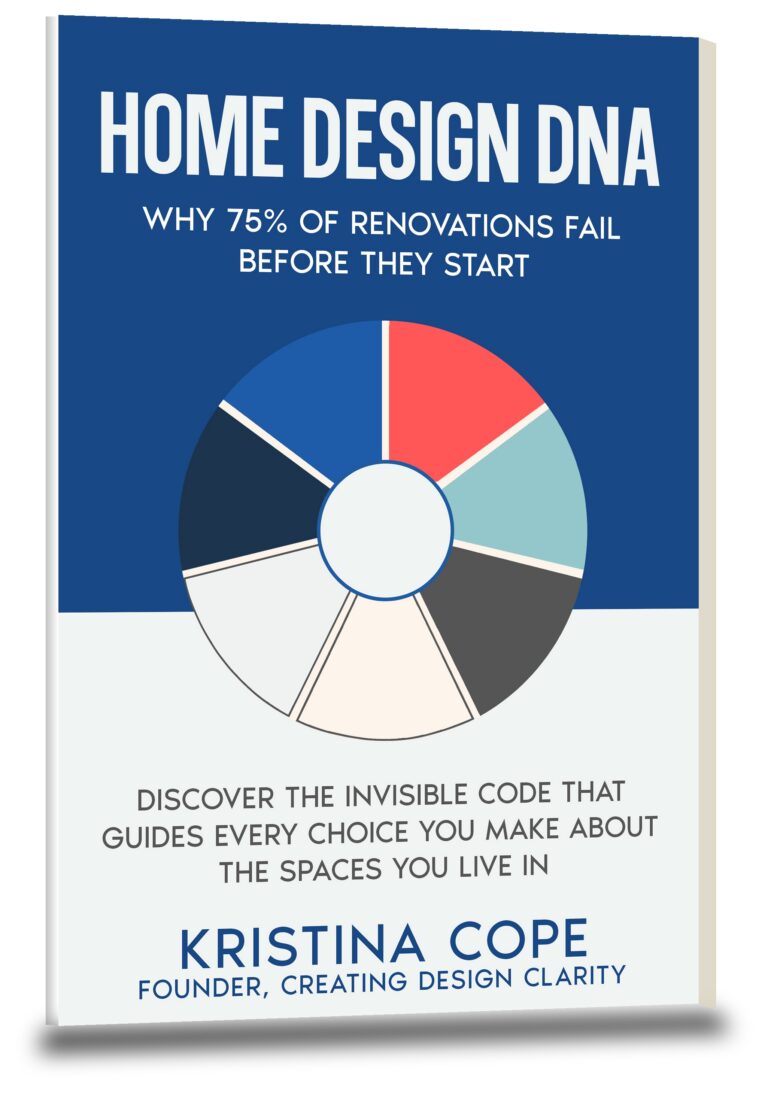
Today I’m sharing what I built to solve that problem. Our free book, Home Design DNA: Why 75% of Renovations Fail Before They Start, is finished, and I would love you to have it.
Why I wrote it
After more than 35 years as an architect and interior designer, I kept watching the same gap open up between what people wanted and what they ended up with. It wasn’t because the designers, architects and builders weren’t good at their jobs. They are, and a good professional can elevate a clear brief into something wonderful. The gap opened because the homemaker had never been given a way to prepare for that very first conversation.
The numbers tell the same story. In our research with more than 1,200 homemakers in New Zealand and Australia, 75.4% of homemakers don’t love their finished renovation, and up to 29.6% of the average renovation budget is lost to rework. Those figures didn’t surprise me. They described exactly what I had seen from the other side of the table, project after project.
The answer was never more expensive design. It was a step that comes before design: knowing what you want, and writing it down, before anyone is hired. I call it Step Zero.
What’s inside, and what isn’t
This is not a style guide. It won’t tell you whether you’re Scandi or coastal or modern farmhouse, because I don’t believe you are any of those things. I believe you already have a design personality. You’ve had it your whole life. You simply haven’t slowed down enough to see it.
The book walks you through why “What’s your style?” is the wrong question to start with, what skipping this step really costs, and where homemakers most often go wrong. Then it gives you a taste of the method I built from those years of client work. Design personality is woven from seven threads: visual language, sensory preferences, spatial intelligence, lifestyle patterns, emotional associations, personal history and cultural background. Along the way there are five “Pause and Reflect” exercises, so you’re not just reading about your design personality. You’re beginning to find it.
Who it’s for
I wrote it for the homemaker who stands in a showroom surrounded by beautiful things and still can’t say what she wants. It’s for the person who has renovated before, spent more than she planned, and quietly felt that something was missing at the end. It’s for couples whose tastes seem to pull in opposite directions, and for renters who want a home that feels like theirs, not a set of rooms they’re borrowing. If you’ve ever thought “I’m just not a design person”, this book is especially for you. I’d like to gently prove you wrong.
Read it, or listen to it
You can read Home Design DNA as a PDF or ePub, and it comes with a professionally narrated audiobook. Many people find the ideas land best when they listen and read along together, perhaps over a quiet cup of tea.
One small invitation
Give yourself an evening with it. It’s not a race. As you read, notice the colours you keep returning to without knowing why, and the room that makes your shoulders drop the moment you walk in. That noticing is the whole point.
This book exists because of the homemakers who trusted me with their stories over many years. I’m so grateful to every one of them. Now it’s your turn.
Your home should tell your story. Let’s figure out what that is.
Kristina